


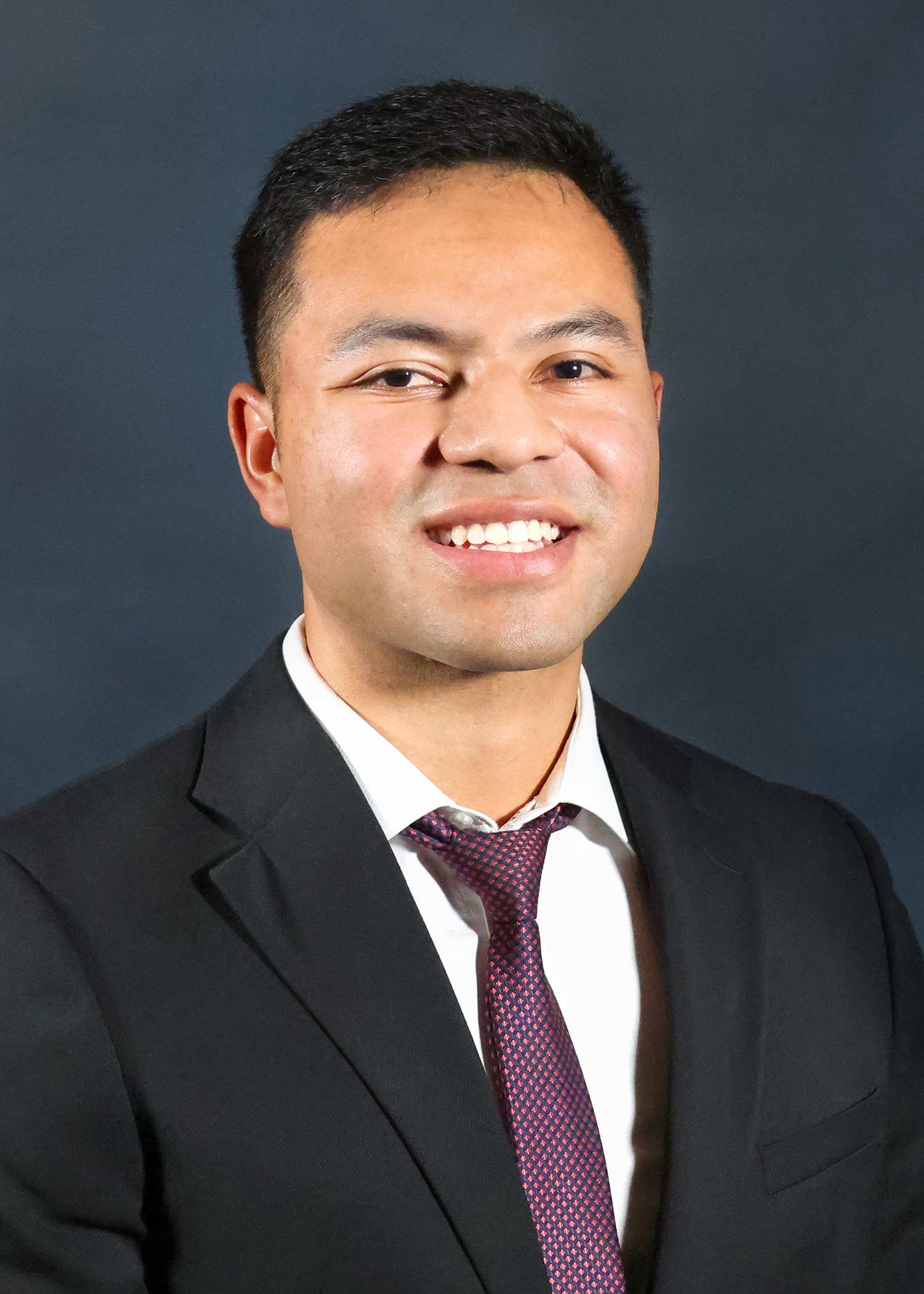
BCoE Student Hall of Fame 2026: Jesus Ortiz
April 29, 2026
Congratulations to the 2026 Bagley College of Engineering Student Hall of Fame class!
Over the next few days, we will be highlighting each SHoF recipient.
The new members participated in a Q&A reflecting on their time at Mississippi State.
Jesus Ortiz
What is your name, age, classification and major?
My name is Jesus Ortiz, and I am 23 years old. I am an MS student majoring in civil and environmental engineering.
What year did you begin studying at MSU, and when is your expected graduation date?
I began my studies at MSU in the fall of 2024 and am expected to graduate in the spring of 2026.
Why did you choose to attend MSU, and why did you choose an engineering field of study?
I first came to Mississippi State University as an intern in the Watersheds and Water Quality Research Lab, and that experience quickly showed me that MSU was more than a place to study; it was a place where I could belong, grow, and contribute. I chose to continue at MSU because of the supportive faculty, the strong sense of community, and the opportunity to conduct meaningful research in water resources engineering. I chose engineering because I believe it is one of the most powerful ways to serve society by solving practical problems that affect communities, infrastructure, and the environment. Civil and water resources engineering especially stood out to me because water challenges, such as flooding, stormwater management, and water quality, require solutions that are both technically strong and socially meaningful.
What are your favorite campus organizations you have become a part of?
My favorite campus organizations and programs have been those that allowed me to connect my academic growth with service, leadership, and community. Through ASCE, I have grown as a civil engineering professional, participated in the ASCE Symposium, served as a judge in the water resources competition, and represented MSU in spaces connected to my field. LSA and SHPE have also been meaningful because they have given me a community where I can celebrate my culture, support others, and participate in events such as “Se Habla Español” and Salsa in the Streets. I have also valued serving as a Graduate Ambassador, where I have the opportunity to represent MSU, share my experience with prospective and current students, and help others feel welcomed into the Bulldog family. In addition, my involvement with the International Institute and the Grad Guide peer mentorship program has allowed me to support new international and graduate students as they adjust to campus life. Each of these experiences has helped me feel more connected to MSU and has allowed me to give back to the community that has supported my own growth.
What has been your favorite course you have taken at MSU and why?
My favorite course at MSU was Engineering Hydrology with Dr. Ramirez, because it directly connects with my research interests and the type of impact I want to make as a water resources engineer. The course helped me better understand how rainfall, runoff, watersheds, and hydrologic models are used to solve real engineering problems related to flooding, infrastructure design, and water management. It also strengthened the foundation for my research on runoff prediction. What made the course especially meaningful was that it showed me how engineering theory can be transformed into practical decisions that protect communities and improve resilience.
Which course has been your most challenging at MSU and why? What was something you learned about yourself after taking that course?
My most challenging course at MSU was Applied Probability with Dr. Zhou. I was the only non-PhD student in a statistics course, so at first I felt outside of my comfort zone and had to work harder to keep up with the depth and pace of the material. The course challenged the way I approached problem-solving because it required a more theoretical and rigorous way of thinking than I was used to in many engineering courses. However, it also became one of the most valuable experiences I have had because it taught me patience, discipline, and confidence. After taking that course, I learned that even when I am placed in a difficult environment, I can adapt, put in the work, and grow through the challenge. It reminded me that I do not need to know everything at the beginning to be successful; I need to be willing to learn, stay consistent, and trust the process.
What is one thing you have learned related to engineering during your time at the Bagley College of Engineering?
One thing I have learned at Bagley College of Engineering is that engineering is not only about finding technically correct answers, but also about developing solutions that are useful, responsible, and meaningful for the people who depend on them. Through my research in water resources, my teaching experience, and my coursework, I have learned that good engineering requires both technical rigor and strong communication. Engineers must be able to explain their decisions clearly, justify their methods, and communicate uncertainty so that others can understand and trust the solution. Whether I am working on flood prediction, runoff modeling, or water quality challenges, I have seen that engineering decisions can directly affect public safety, infrastructure, and communities. Bagley has helped me understand that being an engineer means using knowledge with purpose, integrity, and the ability to communicate ideas in a way that creates positive impact.
How has MSU and, specifically, the Bagley College of Engineering prepared you for professional life after college?
MSU and the Bagley College of Engineering have prepared me for professional life by helping me grow as an engineer, researcher, and leader. Through my research in water resources, I have learned how to approach complex engineering problems, work with large datasets, use technical tools, and develop solutions that can support decision-making. As a graduate teaching assistant, I have strengthened my ability to explain technical concepts, lead students, manage responsibilities, and communicate with patience and clarity. Bagley has also given me opportunities through professional development, service, and campus involvement that have helped me build confidence and represent MSU with pride. Most importantly, my time at MSU helped me discover my own potential. I became capable of things I once did not know I could do, from conducting publishable research and presenting my work to mentoring students and taking on leadership roles. MSU has prepared me not only with technical skills, but also with confidence, discipline, integrity, teamwork, and a stronger sense of purpose for the professional life ahead.
What are your plans after graduation?
After graduation, I will begin working as a Hydraulics Engineer at Kisinger Campo & Associates. I am excited for this opportunity because I want to gain industry experience, apply what I have learned at MSU to different engineering projects, and continue growing as a water resources professional. After gaining that experience, my goal is to pursue a PhD focused on water resources. In the long term, I hope to combine industry experience, research, and teaching to contribute to more resilient and sustainable water infrastructure.
What will you miss most about MSU after you graduate?
After I graduate, what I’ll miss most is the sense of community that made this place feel like home. I’ll miss the friends I made, our daily conversations, and the support system that helped me grow as a graduate student. I’ll also miss talking about new research ideas with the CEE faculty, who pushed me to think more deeply and see engineering in new ways. And of course, I’ll miss the football games, campus traditions, and the excitement of being part of the Bulldog family.
The Bagley College of Engineering is online at bagley.msstate.edu and can be found on Instagram, Facebook, LinkedIn, X and YouTube at @msuengineering.
MSU is Mississippi’s leading university, available online at msstate.edu.
Category: CEE, News, Newsroom, Recognition, Student Spotlight
Tagged: SHoF26